
At iPRES 2024, a panel discussion on cloud adoption (opens in new tab) for digital preservation revealed significant concerns across the international digital preservation community, particularly around cost management and vendor dependency. Recognizing an opportunity to shift the conversation from concerns to solutions, APTrust proposed a collaborative workshop for iPRES 2025. After more than a decade of operating preservation infrastructure in the cloud, and knowing that colleagues at the California Digital Library had developed similar expertise, APTrust’s Nathan Tallman (Executive Director) and Flavia Ruffner (Lead Engineer for DevSecOps) partnered with CDL’s Eric Lopatin (Product Manager for Digital Preservation) and Terry Brady (Technical Lead for the Merritt Repository) to design a workshop focused on sharing practical knowledge with the community.
The Workshop Design
The “Navigating Digital Preservation in the Cloud” workshop at iPRES 2025 brought together practitioners from around the world to collaboratively develop a set of good practices. Rather than presenting lectures, the facilitators structured the session around three core themes: budget and cost management (FinOps), core preservation activities, and DevOps workflows. Participants worked in breakout sessions, contributing their experiences, challenges, and solutions directly to a shared document in real time.
The collaborative energy was immediate. Practitioners compared notes on egress costs, debated the trustworthiness of vendor-managed replication, and strategized on how to justify cloud budgets to institutional leadership. The result was a living document capturing the collective wisdom of an international community working at the intersection of cloud computing and long-term preservation.
Key Themes
The document reflects where the community currently stands: cautiously optimistic about cloud-native tools, frustrated by cost unpredictability, seeking shared language across technical and preservation roles, and deeply concerned about data sovereignty and trust.
Several themes emerged across all three breakout groups:
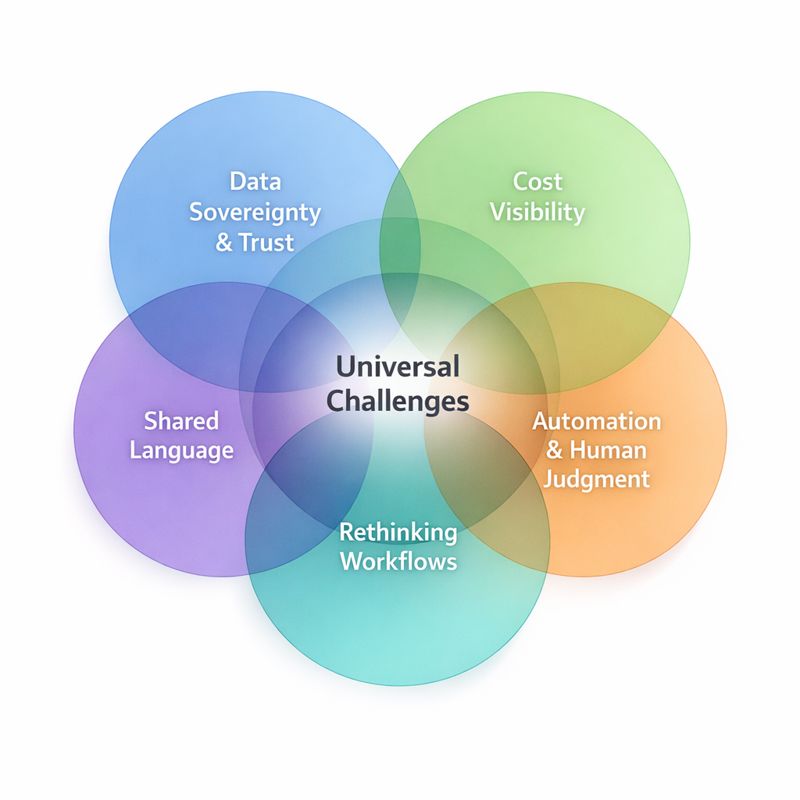
- Trust came up repeatedly — in cloud services to maintain fixity guarantees, in replicated copies that are genuinely independent, and in costs that remain predictable. These concerns reflect institutions making significant preservation commitments based on vendor promises that are difficult to verify independently.
- Cost visibility emerged as a universal challenge. Egress charges were described as “a maze”—different rules for different vendors, regions, and scenarios, with calculators that feel neither intuitive nor comparable.
- Data sovereignty and geographic constraints added complexity to every discussion. For institutions required to keep data within specific national borders, cloud flexibility often collides with regulatory reality. This was especially evident for participants from countries with limited local cloud infrastructure, where options are constrained and costs elevated.
The document also captures what practitioners wish existed: a FinOps group for digital preservation, shared testing grounds for cloud-based tools, and starter playbooks for institutions beginning their cloud journey.
Practical Strategies
The document includes strategies institutions are currently using: tracking costs with early notifications and anomaly detection, breaking workflows into small containerized steps, rethinking fixity approaches to balance thoroughness with expense, and using cloud transitions as opportunities to re-examine processes rather than simply replicating existing workflows.
It also acknowledges open questions where the community needs shared understanding:
- Can institutions rely on cloud vendors’ block-level integrity checks?
- How should DevOps responsibilities be divided between IT and preservation teams?
- What constitutes genuine independence of copies in cloud environments?
A Living Resource and Call to Action
The document is deliberately framed as living. A static version is preserved in UVA’s LibraOpen repository at https://doi.org/10.18130/q6de-8m62 (opens in new tab), but a Google Doc version remains open for community contributions. The archived version will be periodically updated to capture evolving practices.
The facilitators invite the community to read, review, and contribute to this collaborative resource. Add comments to the Google Doc. Share experiences that align with or challenge the documented practices. Suggest additional strategies or open questions. The document’s value grows through community participation.
The workshop concluded with seven concrete recommendations for community action: from building shared spaces for ongoing learning to addressing Indigenous data sovereignty concerns more directly. None require massive infrastructure or funding; most could start with a shared document, a standing call, a GitHub repository, or an informal community-of-practice model. Let us know if you want to be part of the conversation.
The iPRES 2025 workshop demonstrated that digital preservation practitioners are stronger when they share not just successes, but uncertainties and ongoing challenges. The cloud introduces new complexities while creating new opportunities for community collaboration and learning. This document represents a starting point for that ongoing conversation.
Download the collaborative good practices document at https://doi.org/10.18130/q6de-8m62. Join the conversation by commenting on the Google Doc version.